The Table
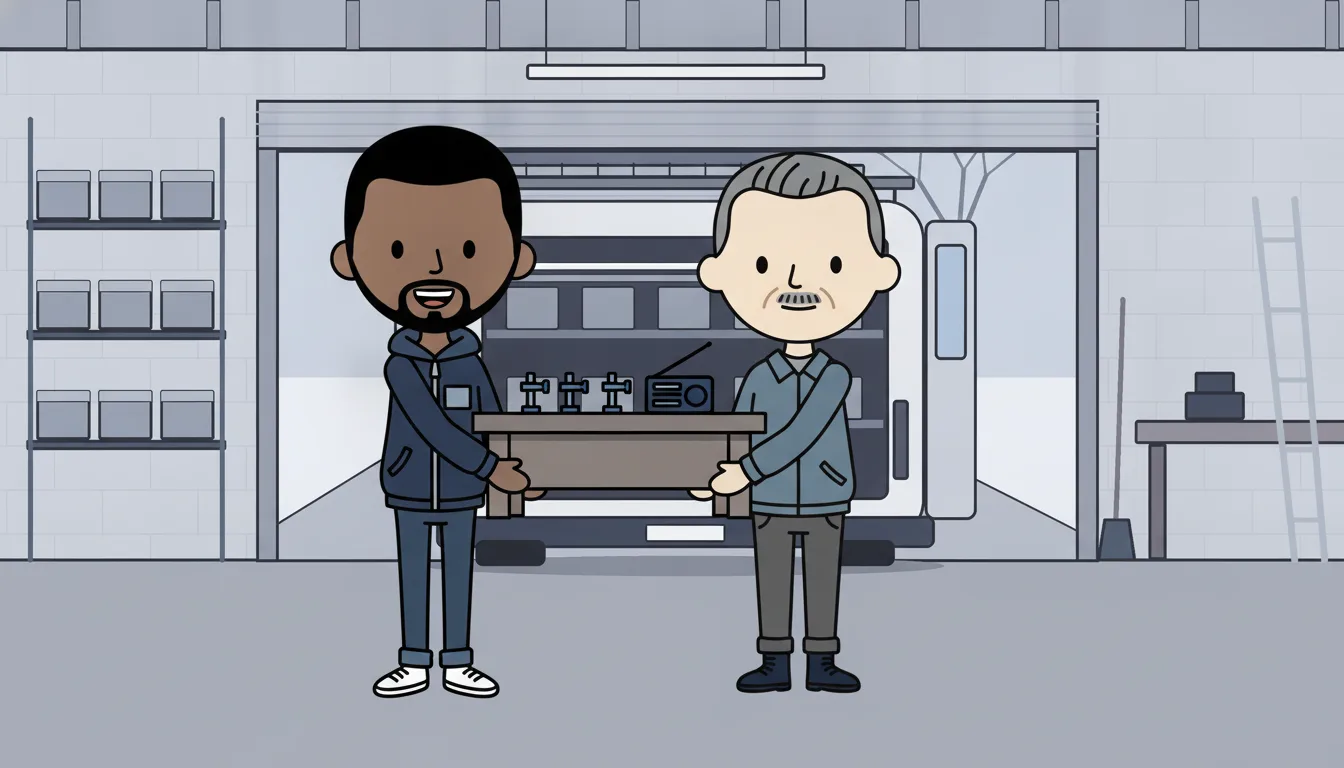
This episode premieres on the Delta Psi YouTube channel. The guide sheet is ready now.
DEV“My friends think this group is a cult.”
CARLA“What do you tell them?”
DEV“Nothing.”
The scene
Hal Pruitt is selling his plumbing business to a nineteen-year-old over three years. The handover is written, Marisol is good, and the first Wednesday with no van is coming. He is scared of it. He has been married to Bev for thirty-one years and has not told her.
On Thursday he visits Dez in the basement laundry room where Dez builds furniture. The building has given Dez until the end of the month. Hal has an empty garage bay with a long wall. He thinks it, and leaves without saying it.
On Friday he is in Carla’s chair. A client of fourteen years has gone to the salon across town, and by eleven the parking, the landlord and Tina’s playlist are all at fault. The flyer for Carla’s Tuesday clinic has been half finished under the register for three weeks.
On Tuesday, Dev’s phone buzzes with a group chat that thinks the table is a cult. He has told them nothing, and the table nothing about them. Walt asks whether anyone at the table has done one thing for anyone at the table in eight weeks. Then he asks Hal what he is not saying. Hal says, “Nothing.”
The idea
Strong feeling moves people. Reason explains it afterward. Thought alone is cold and does not move you; thought mixed with feeling is what gets acted on. That is why Chapter 3 asked you to picture your aim in detail and read your statement aloud. The point was to attach feeling to the words.
The feeling is energy. It does not care what you do with it. It will pour into a fight or a sales call or a novel or a bottle with equal enthusiasm. Whatever moves you most, learn to aim it. When a strong feeling shows up, the question is where to send it.
There are many sources of strong feeling. Love. Deep friendship. Music. A cause. Competition. Shared hardship. A deadline. Fear. Some are constructive, and some, like substances and the manufactured outrage of a feed, are destructive. Every one of them raises your energy. The constructive ones can be aimed. The destructive ones aim you.
Intimacy, if you break the word apart, sounds like in-to-me-see. That is what it is: letting another person see in. It requires dropping defenses, and it is the thing most people want and fear in equal measure, usually because they let someone see in once and it was not returned. If you cannot be vulnerable with anyone, you will reach your aim alone, and it will not feel like much.
Nobody reaches a large aim alone. Power, for the book’s purposes, is organized knowledge and effort directed at a definite aim. One person can hold only so much. Two or more people, in real agreement, working toward one definite purpose, can hold far more. The book calls it your table. Who sits at it decides most of what you will become.
Two conditions. The people have to be working toward something definite, together. And they have to be in harmony. A group with a grudge in it produces nothing. The strongest table in the book had three people in it. The largest tables did almost nothing.
The people you spend your time with are either feeding your energy or draining it. There is no neutral.
The Memo
- Subject
- The Solo Climb
- CC
- One plumber. One wife of thirty-one years. Four people and a convener, eight Tuesdays.
- Moves
- Sit at the table, keep the scary part at home, see what the others need, say nothing because it is their business, carry the aim alone in company.
- Outcome
- Five people reach five aims alone, or don’t.
The pattern is tempting because it looks like manners. Hal can see that Dez needs a wall, that Carla needs a flyer finished, and that Dev needs one person who does not laugh. He says nothing, because their business is theirs and his fear is his. Nobody is rude. Nobody is helped. It also feels like strength: the steady one does not ask. The cost shows up in week nine, when everyone at the table is exactly as alone as they were in January, and the table has done what a waiting room does.
The Rewind
Walt asks Hal what he is not saying, and this time Hal answers the question sideways: he offers Dez the bay, long wall, nothing in it on Sundays. He tells Carla about Marisol’s cousin, who does hair out of her kitchen and wants a chair. Dev picks the one name in the chat whose company leaves him more capable, tells him about Tuesdays, and puts the rest on mute. That night, in the kitchen, Hal tells Bev he is scared of the first Wednesday. She says she knows, and that she has been waiting for him to say it. On Sunday the bench comes off the van and into the bay. Each of them sends one invitation: the first name at their own table.
What it cost: thirty-one years as the steady one, and it turns out she could see in the whole time.
This week
- One
Three and three. Write the names of three people whose company leaves you more capable than it found you. Then three whose company leaves you less. Then decide what to do about the second list. Mute counts. Lunch less often counts.
- Two
Send the first invitation today. One person, one line: “I’m working on something. Can I tell you about it?” Write the name and the date you sent it.
- Three
Energy inventory. Pick one constructive source you are not using (music, a deadline, a cause, a friend doing the same thing). Write how you will add it this week. Then add it.
Go check: the research behind this chapter
The book names its sources so you can look them up. The episode does not; this box does.
Sublimation: Freud’s name for redirecting a powerful drive into productive work. George Vaillant, who ran the longest study of adult development ever conducted at Harvard, classed it among the mature defenses, the ones associated with the healthiest and most successful lives.
The inverted U: the Yerkes-Dodson experiments (1908) on arousal and performance. Too little emotional energy and you underperform; too much and you choke. The point is to find the level where you are alert and moved, and to learn what gets you there.
Vulnerability: Brené Brown’s research, which made the public case that the willingness to be seen is a precondition for connection rather than a weakness in it.
Attachment research: decades of findings that people who can let others close, and who can tolerate the risk of rejection, have more stable relationships and better outcomes in almost every area measured.
Social contagion: Nicholas Christakis and James Fowler, using thirty years of data from the Framingham Heart Study, showed that happiness, obesity, smoking and even loneliness spread through social networks out to about three degrees. Your friends’ friends’ friends affect your weight and your mood.
Before you watch
Read Chapter 9, including the exercises at the end. You will not fill them in yet; you will know what is coming.
Have the book open to the Your table exercise. Bring the name of one person you have been meaning to tell about what you are working on, and have not.
Next Tuesday
WALT: “You’ve all read me your aims. You haven’t heard mine.”
The last chapter, and the last Tuesday: Walt unfolds his page, and the table goes looking for six fears on a list, one each. Read Chapter 10 and skim the appendix before you come.