Thursday in February
This episode premieres on the Delta Psi YouTube channel. The guide sheet is ready now.
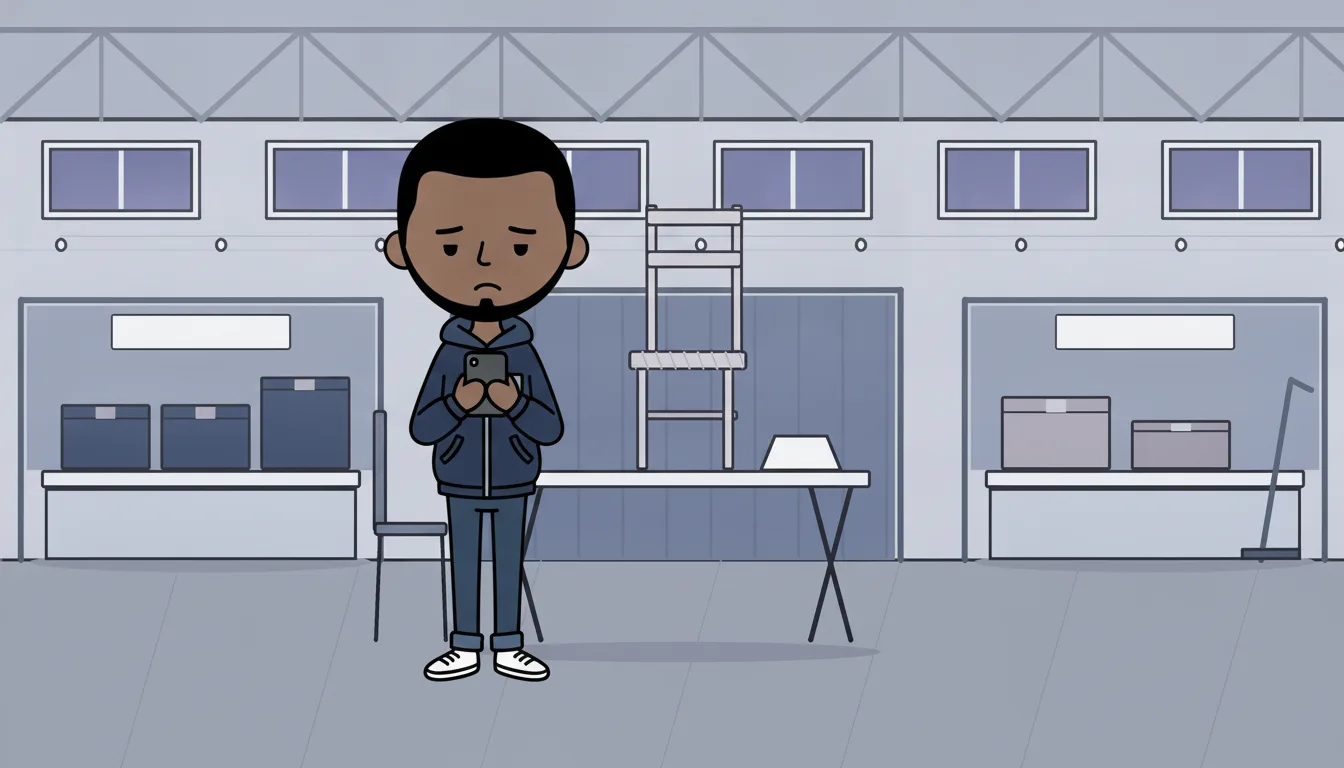
DEZ“Eight hours at the fair. Sold nothing. I’m done.”
WALT“Done with the chair, or done with the plan?”
The scene
Dez takes his first chair to the county craft fair. One folding table, one chair, one card he lettered at midnight.
Forty people pick it up. One asks if he has a card or a page anywhere. He doesn’t. Nobody buys it.
Sunday the keys go on the hook and the couch is closer than the basement stairs. Monday the same.
Tuesday he puts the chair on the library table and says he’s done. Walt asks: done with the chair, or done with the plan?
Then Walt asks a different question. Who’s still reading their statement twice a day? Hands.
Nobody.
The idea
There is nothing heroic about the word persistence. It just happens to be the thing without which nothing else in this book works.
Your first test came early. In Chapter 3 you were asked to read your statement aloud twice a day. Most people read the instructions, nodded, and did it for four days. That is not a verdict. Persistence is a state of mind, which means it can be built. It rests on definite causes: a clear purpose, desire, self-belief, definite plans (even a weak plan, written down, encourages persistence), accurate knowledge, cooperation, will, and habit. Persistence is the direct result of habit.
Nobody feels like making the calls on a Thursday afternoon in February. The people who make them have stopped asking how they feel. Everybody has the moment of doubt. What separates the ones who make it is that they have built something that carries them through it. Mostly that something is habit.
The old picture was that persistence was willpower, a strength you either had or did not. The key experiments behind that picture failed to replicate in careful retests. The current view is that willpower is unreliable and not worth building a life on. What is reliable is habit. Something close to half of what we do each day is habitual: triggered by context, run without decision. New habits take a median of about sixty-six days to become automatic, with a wide range. Two months of doing the thing on a cue, and you stop needing to decide.
So persistent people have arranged their lives so that will is rarely required. The statement gets read because the alarm goes off. The environment does the work. Make the behavior you want obvious and easy, and the behavior you do not want invisible and hard.
Fear of criticism sits at the root of most ideas that never get past the planning stage. We dramatically overestimate how much other people notice and remember what we do. The audience you are afraid of is mostly in your head.
And persistence means holding the aim, not holding a broken plan.
The Memo
- Subject
- The Four-Day Streak
- CC
- Four people, one convener, one chair.
- Moves
- Read the instructions. Nod. Four days. The Thursday. Call the feeling a verdict. Quit a few steps short.
- Outcome
- Everyone stops in the same week, and nobody says so.
The streak is tempting because the first four days feel like proof you meant it, and the Thursday feels like proof you didn’t. Both are feelings. The plan stops in exactly the week it was supposed to turn into a habit, and because each person is quietly sure they are the only one who stopped, nobody says so, and nobody restarts. Dez’s version has a chair in it, so it looks like a decision. It is the same four days as everyone else’s.
The Rewind
Dez answers Walt: the plan. Then he builds the one daily action the way the chapter says. The cue is the keys on the hook. The tiny version is one joint, ten minutes. The TV remote goes in the bench drawer, so getting it means going downstairs anyway. The chisel goes on the kitchen counter where the phone used to sit. A tally of sixty-six boxes goes on the fridge. He restarts the statement with two labeled alarms and writes the date. He posts one photo of the chair. Eleven people like it. One says the finish on the seat is uneven, and he’s right; Dez writes “thanks” and fixes the finish. The next Tuesday the table restarts the statement together, on the same alarm.
What it cost: the chair is still unsold, the fair plan is dropped, and the first comment from a stranger was a correction.
This week
- One
1. Design the one daily action as a habit. The cue, the tiny version, one thing you remove, one thing you add, and where you track it. Write the start date and the date sixty-six days out.
- Two
2. Restart the statement. Two alarms, each one labeled, and the date you restarted. If you stopped at four days, you are in good company. Day one again.
- Three
3. One thing you haven’t done for fear of what they’d say. Who, specifically. What they are actually likely to say. How long they are likely to think about it.
Go check: the research behind this chapter
Grit (sustained effort toward long-term goals), and the overlap with conscientiousness: Angela Duckworth.
Habit as close to half of daily behavior, triggered by context: Wendy Wood.
How long new habits take to become automatic (a median of about sixty-six days): Phillippa Lally.
Obvious and easy, invisible and hard: James Clear.
The spotlight effect: Thomas Gilovich.
Before you watch
Read Chapter 8 before Tuesday. Have the book open to the Habit design exercise, and have your Chapter 3 statement where you can find it (most people will need to look).
Bring one true answer to the table: how many days did you read the statement twice a day before you stopped?
Next Tuesday
DEV: “My friends think this group is a cult.”
CARLA: “What do you tell them?”
DEV: “Nothing.”
Chapter 9, Energy, Emotion and the People Around You: who sits at your table decides most of what you become, and nobody at this one has told their other tables a thing.